
Anatomical Position
When a person is standing straight with eyes looking forwards, both arms by the side of body, palms facing forwards, both feet together, the position is anatomical position.
Features
- Standing upright
- Head & eyes facing forward
- Arms by side
- Palms facing forward
- Feet flat and forward
All anatomical terms are described based on this position.
Supine Position
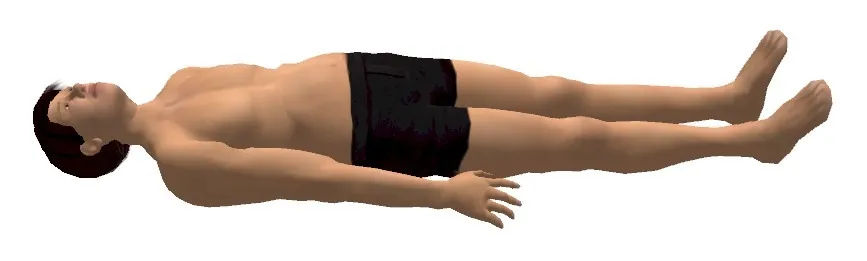
In anatomy, the supine position is a position of the body in which a person is lying horizontally on their back, facing upward. The face is directed vertically toward the ceiling, and the spine is aligned horizontally. This is considered the opposite of the prone position (lying face down).
Features
- Lying horizontally on the back
- Head and eyes facing upward (forward relative to horizon)
- Arms by the side of the body (palms may face up or toward body)
- Legs extended, feet typically pointing slightly outward
- Spine in a neutral, horizontal alignment
Clinical Note: While standard for surgery and exams, the supine position can cause airway obstruction by the tongue or, in late pregnancy, compress the inferior vena cava leading to hypotension. Prolonged immobilization in this position risks pressure sores on the sacrum and heels.
Prone Position
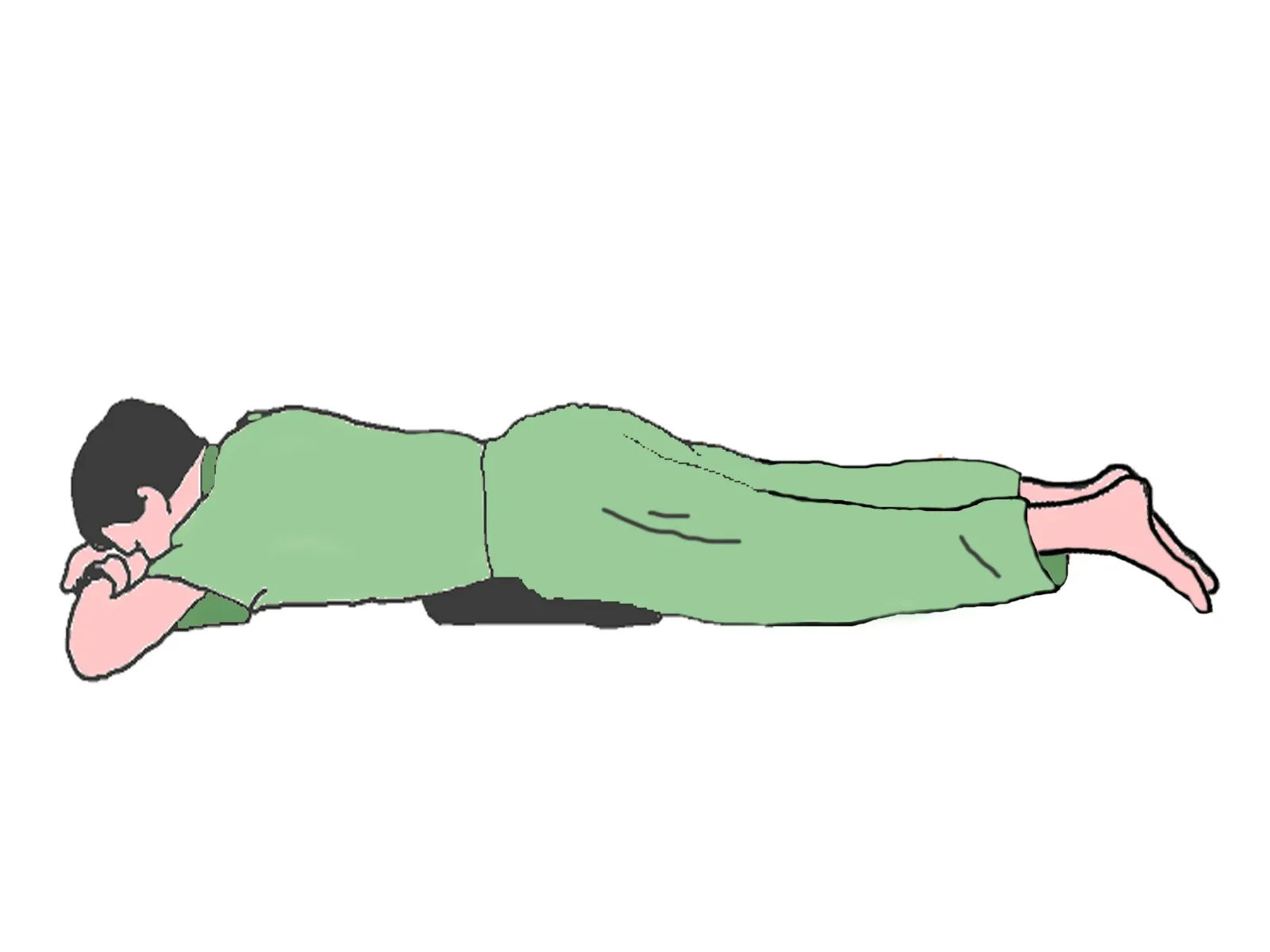
In anatomy, the prone position is a position of the body in which a person is lying horizontally on their stomach, facing downward. The face is typically turned to one side to allow for breathing, and the back is the most superficial aspect of the body. This is the direct opposite of the supine position (lying on the back).
Features
- Lying horizontally on the stomach (anterior surface)
- Head turned to one side (typically) to maintain airway
- Arms may be positioned beside the head or alongside the body
- Legs extended, feet in neutral position
- Spine maintains its natural curves under gravity
Clinical Note: The prone position is essential for surgeries involving the posterior body (spine, back). It is also used therapeutically in patients with Acute Respiratory Distress Syndrome (ARDS) to improve oxygenation (prone positioning). However, careful padding is required to avoid pressure on the eyes, breasts, and genitals, and to maintain neck alignment.
Lateral Position
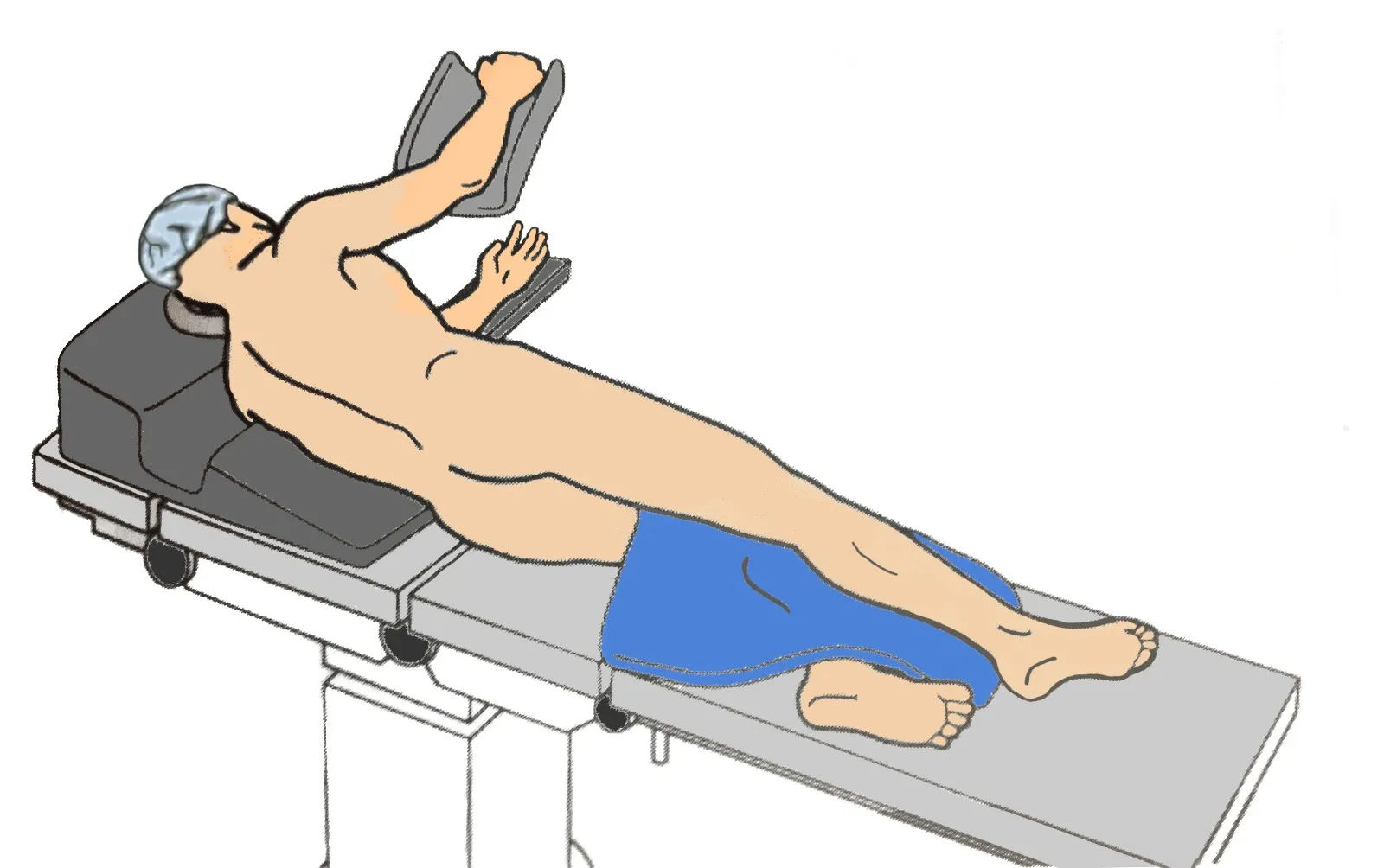
In anatomy, the lateral position is a position of the body in which a person is lying on their side. It is also commonly referred to as the side-lying position. When specified as right lateral, the person lies on their right side; left lateral means lying on the left side. This position is frequently used in surgery, medical imaging, and as a recovery position.
Features
- Lying horizontally on the side (right or left)
- Head supported in a neutral position, aligned with the spine
- Inferior arm (down side) may be positioned forward or under the head for support
- Superior arm (up side) is typically positioned forward or on a pillow
- Legs may be staggered with the top leg flexed over a pillow to stabilize the pelvis
Clinical Note: The lateral position is the basis of the recovery position used for unconscious patients to maintain a clear airway and prevent aspiration. In surgery (e.g., hip or thoracic procedures), it provides access to lateral structures, but requires careful padding of pressure points like the ear, shoulder, and greater trochanter, and an axillary roll to protect the neurovascular bundle of the dependent arm.
Lithotomy Position
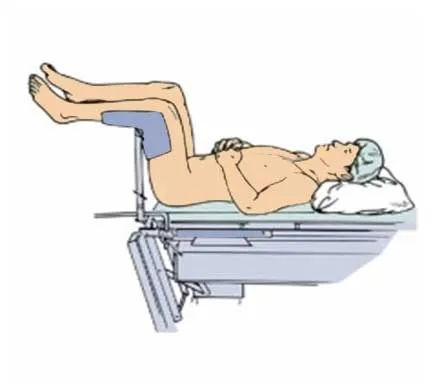
In anatomy and surgery, the lithotomy position is a variation of the supine position in which the individual lies on their back with hips and knees fully flexed and legs elevated and supported in stirrups. The name is derived from the Greek words lithos (stone) and tomia (cut), as it was historically used for lithotomy—the surgical removal of bladder stones.
Features
- Lying on the back (supine) with buttocks positioned at the edge of the table
- Hips flexed between 80-100 degrees (or more, depending on variation)
- Knees flexed with lower legs supported by stirrups
- Thighs abducted (separated) to allow access to the perineum
- Arms may be tucked at sides or extended on arm boards
Clinical Note: The lithotomy position provides excellent surgical access for gynecological, urological, and colorectal procedures (e.g., childbirth, hysterectomy, prostate surgery). However, it carries significant risks: prolonged positioning can cause compartment syndrome of the lower legs, common peroneal nerve injury (foot drop), and positioning-related hip injuries. Legs must be lifted and lowered simultaneously to avoid torsion on the lumbar spine.
Fowler's Position
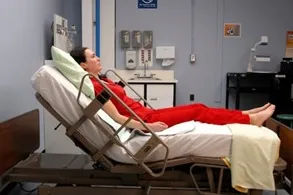
In anatomy and clinical medicine, Fowler's position is a standard patient position in which the individual is seated in a semi-upright posture at an angle between 45 and 60 degrees. Named after surgical pioneer George Ryerson Fowler, this position is achieved by elevating the head of the bed while optionally flexing the knees slightly to prevent the patient from sliding downward. Variations include Low Fowler's (15-30 degrees), Semi-Fowler's (30-45 degrees), and High Fowler's (60-90 degrees).
Features:
- Sitting upright with head elevated between 45-90 degrees (depending on variation)
- Knees slightly flexed (usually 15 degrees) to support the legs and prevent sliding
- Feet supported by a footboard to prevent foot drop and maintain position
- Arms may rest on pillows or bedside tables for support
- Head and neck maintained in neutral alignment with the spine
Clinical Note: Fowler's position is essential for patients with respiratory distress (e.g., COPD, pneumonia) as it allows for maximum chest expansion and diaphragmatic descent, improving oxygenation. It is also used for feeding, swallowing evaluations, and intracranial pressure management. However, prolonged positioning requires pressure relief on the sacrum and heels, and caution is needed in hypotensive patients as the upright posture can reduce cerebral perfusion.